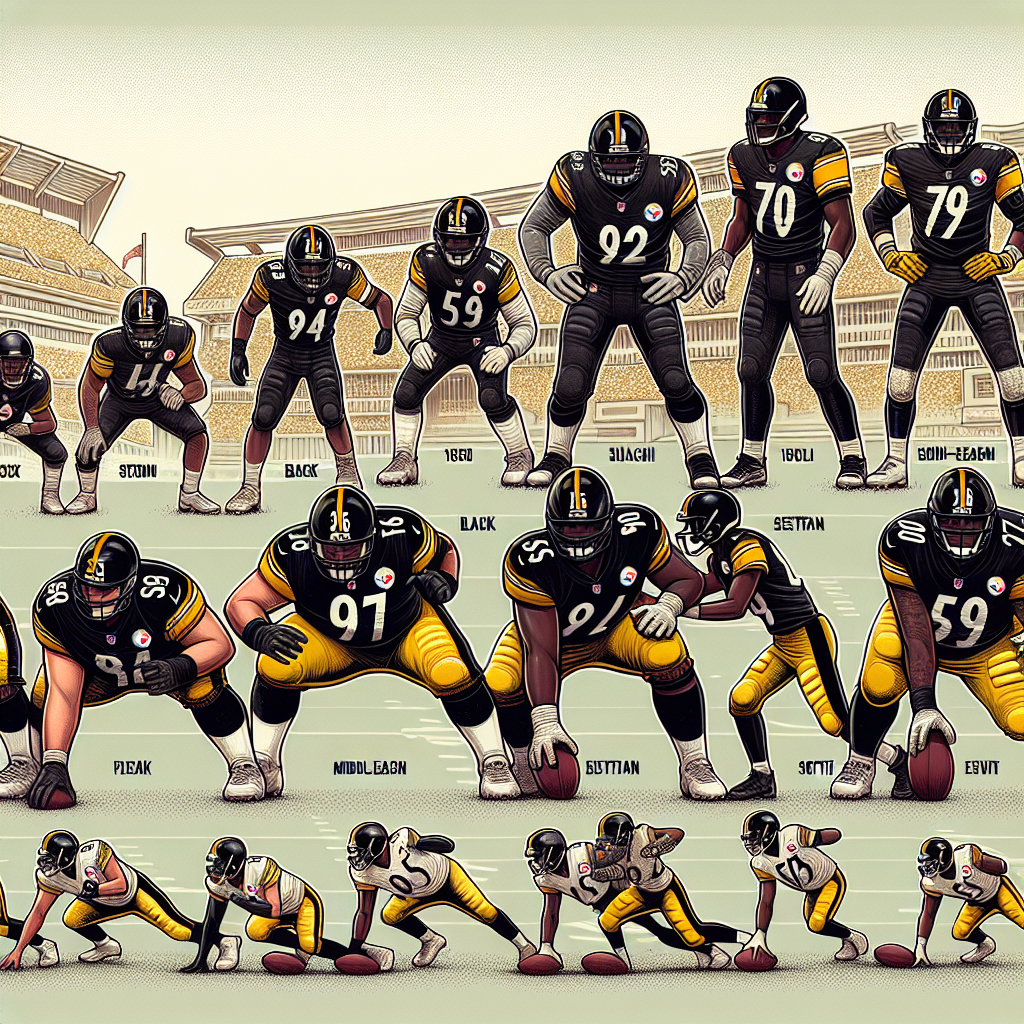
The Steelers offensive line has long been recognized as a foundational pillar in the Pittsburgh Steelers’ success. From legendary Super Bowl runs to recent rebuilding years, the offensive line’s performance has directly influenced the team’s fortunes. In this comprehensive analysis, we explore the evolution, design, and current state of the Steelers’ offensive line, examining its pivotal role in both pass protection and run blocking. We’ll also discuss key players, coaching philosophies, and how this unit stacks up against other NFL front fives.
Throughout the decades, the Steelers have been known for their physical, relentless approach in the trenches. During the 1970s, the Steelers offensive line, anchored by names like Mike Webster and Jon Kolb, helped propel the team to four Super Bowl victories. The “Steel Curtain” often takes the spotlight, but the offensive line’s contribution to the ground attack and pass protection was equally crucial. Over the years, linemen such as Alan Faneca, Marvel Smith, and David DeCastro have continued this tradition of excellence.
In the last decade, the Steelers offensive line has undergone significant transformations. As the NFL has shifted toward more dynamic passing offenses, the responsibilities of offensive tackles, guards, and centers have evolved. Recent drafts and free agency moves have focused on adding agility and versatility to the line. Offensive line depth, zone blocking schemes, and pass protection have become critical keywords when analyzing Pittsburgh’s strategy.
The Steelers’ success up front hinges on the performance of individual linemen working as a synchronized group. Let’s spotlight some recent standouts:
As the anchor, the center is responsible for calling protections and orchestrating the line. Mason Cole has provided consistency and leadership, helping younger teammates adjust to the NFL’s speed.
Known for his athleticism, Daniels excels in both run blocking and pass sets. His ability to pull and finish blocks is essential in the Steelers’ zone run scheme.
As a left tackle, Moore protects the quarterback’s blind side. His growth in handling elite edge rushers has been a positive sign for the Steelers offensive line depth chart.
The Steelers utilize a blend of zone blocking and power run concepts, allowing flexibility based on opponent tendencies. Zone blocking emphasizes lateral movement and teamwork, enabling running backs to find cutback lanes. Power schemes rely on brute strength and pulling guards to create mismatches at the point of attack.
No NFL offensive line is without its challenges. The Steelers have faced injuries, lineup changes, and the need to integrate rookies quickly. However, these adversities have also created opportunities for depth players to prove themselves. The coaching staff’s focus on cross-training linemen at multiple positions strengthens the unit’s resilience.
Trends to Watch:
How does the Steelers’ front five compare to other NFL offensive lines? Analytics and expert rankings often place Pittsburgh’s unit in the middle of the pack, noting their improvement in run game efficiency but highlighting the need for better pass protection. Consistency, health, and player development will be key factors in moving up the rankings.
With a focus on offensive line development, the Steelers aim to return to the upper echelon of NFL offensive lines. The blend of veteran leadership and young talent bodes well for future seasons. As Pittsburgh continues to prioritize the trenches in the draft and free agency, fans can expect the offensive line to remain a cornerstone of the team’s identity.
The Steelers offensive line is more than just a collection of big bodies—it is the engine that drives the team’s physical, blue-collar style of football. Whether opening holes for running backs or protecting the quarterback, this unit embodies the toughness and resilience that define Steelers football. As the NFL landscape evolves, so too will Pittsburgh’s offensive line, adapting to new challenges and seizing opportunities to lead the franchise to further glory.
“A strong offensive line doesn’t just protect the quarterback—it sets the tone for the entire team.”
Introduction: The Backbone of Pittsburgh’s Offense
Historical Overview: Building the Wall
Modern Era: Rebuilding and Adapting

Key Players and Their Roles
Center: Mason Cole
Guard: James Daniels
Tackle: Dan Moore Jr.
Offensive Line Schemes: Zone vs. Power

Challenges and Opportunities
Comparisons and Rankings
Team
Strength
Weakness
Pittsburgh Steelers
Run blocking, youth development
Pass protection consistency
Philadelphia Eagles
Elite pass protection
Aging core
Cleveland Browns
Physical run game
Injury concerns
Future Outlook: Building for Success
Conclusion: The Heart of Steelers Football